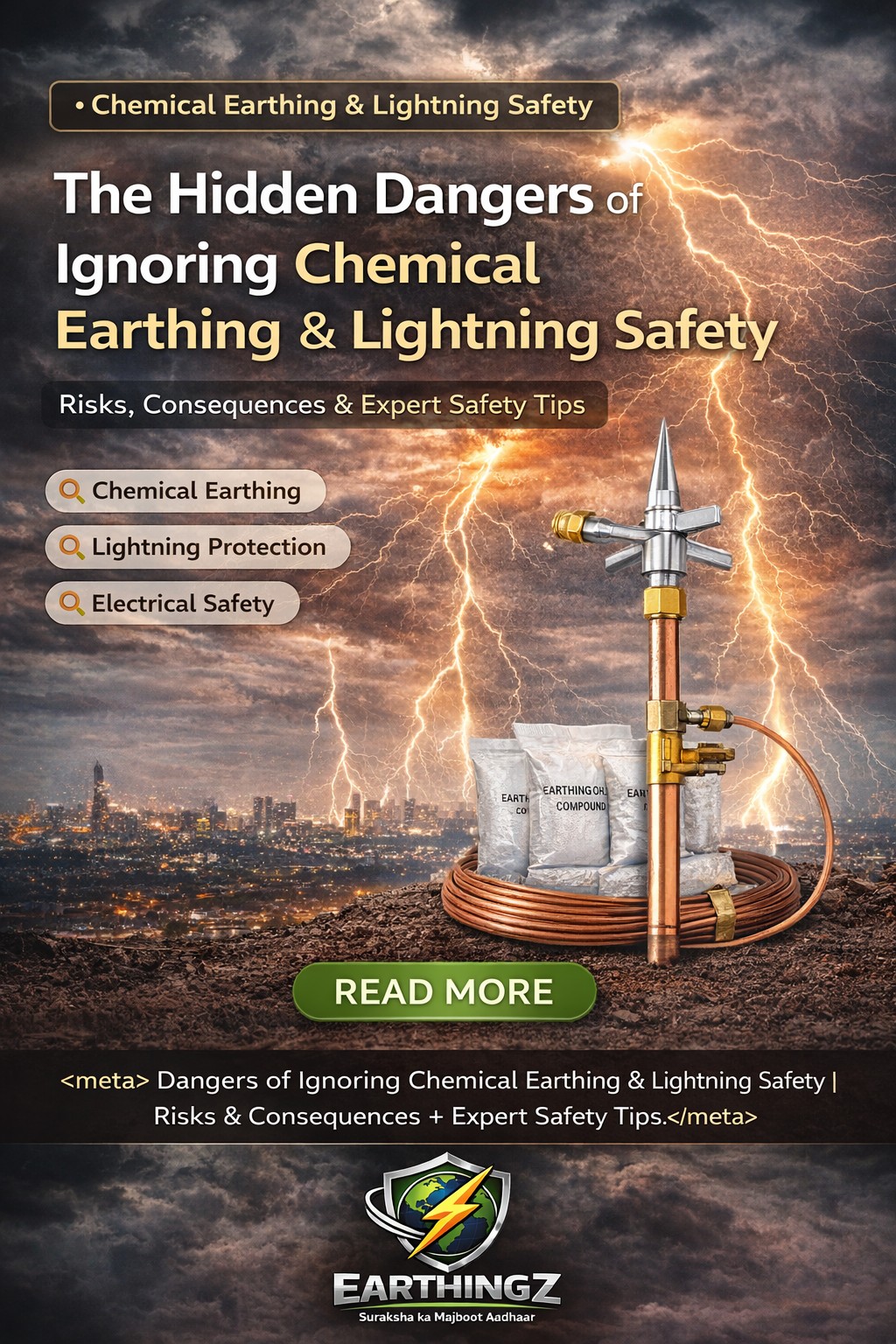
The Hidden Dangers of Ignoring Chemical Earthing & Lightning Safety — A Complete Guide
Introduction
In today’s world of advanced electrical systems, the
importance of proper grounding and lightning protection cannot be overstated.
While most facility managers focus on fire alarms, exits, or protective gear,
it's the invisible electrical safety foundation — chemical earthing and
lightning safety — that plays a critical role in protecting lives,
infrastructure, and business continuity. Ignoring these systems can lead to
catastrophic consequences.
Why Earthing & Lightning Safety Matter
Chemical earthing and lightning protection systems work
together to safely direct fault currents and high-voltage surges into the
ground, minimizing the risk of electrical shocks, fires, and equipment damage.
Chemical earthing ensures a low and stable resistance path to earth,
maintaining safety even in varying soil conditions. Lightning protection
systems intercept and redirect dangerous strikes away from buildings and
sensitive electrical equipment.
Risks of Ignoring Chemical Earthing and Lightning
Protection
Failing to implement a robust earthing and lightning safety
system can result in:
⚡ 1. Electrical Fires
Ungrounded or inadequately earthed systems can overheat
during a surge, causing insulation failure and fires — a major risk in
industrial and commercial facilities.
💥 2. Equipment Damage
Voltage spikes from lightning or electrical faults can
destroy sensitive equipment such as PLCs, servers, and motors, resulting in
expensive repairs or replacements.
🧍♂️ 3. Safety Hazards
Employees and inhabitants are at risk of electric shock and
severe injuries if electrical faults are not safely diverted to the ground.
📉 4. Operational Downtime
Unplanned outages due to electrical issues can stall
production lines and disrupt services, leading to financial losses.
🏢 5. Non-Compliance and
Legal Risks
Ignoring safety standards can lead to violations of
electrical codes, increased insurance premiums, or denied claims after an
incident.
How Chemical Earthing Protects Your Infrastructure
Chemical earthing involves installing electrodes with
conductive compounds that improve soil conductivity and maintain constant low
resistance. The benefits include:
✅ Stable earth resistance over
time
✅
Less maintenance compared to conventional systems
✅
Long service life and reliability
✅
Safe fault current dissipation during surges or lightning strikes
These advantages make chemical earthing the preferred choice
for industrial plants, commercial complexes, data centers, and hospitals
where electrical safety is paramount.
Lightning Protection: Not Optional, Essential
Lightning is unpredictable and can carry massive currents
into your electrical system. Without a certified lightning protection system:
🔹 Lightning energy may
directly strike your structure
🔹
Electrical installations could be destroyed
🔹
Fire and personal injury risks increase significantly
Together with chemical earthing, lightning arresters and
surge protection devices form a complete electrical safety shield for
your property.
Best Practices for Safety Implementation
To safeguard infrastructure and people:
🔹 Conduct regular
electrical safety audits
🔹
Use low-resistance chemical earthing systems
🔹
Install certified lightning arresters and surge protectors
🔹
Partner with experienced professionals for system design, installation and
maintenance
🔹
Train teams to monitor and test systems periodically
Conclusion
Electrical safety isn’t visible — until something goes
wrong. But the consequences of ignoring chemical earthing and lightning
protection can be devastating, costly, and dangerous. Prioritizing these
systems ensures not only compliance with safety standards but also long-term
operational reliability and peace of mind.
Invest today in a complete earthing and lightning safety
solution — because proactive protection is always better than reactive repair.
Questions about The Hidden Dangers of Ignoring Chemical Earthing & Lightning Safety — A Complete Guide?
Get a free site audit from Earthingz experts today.